
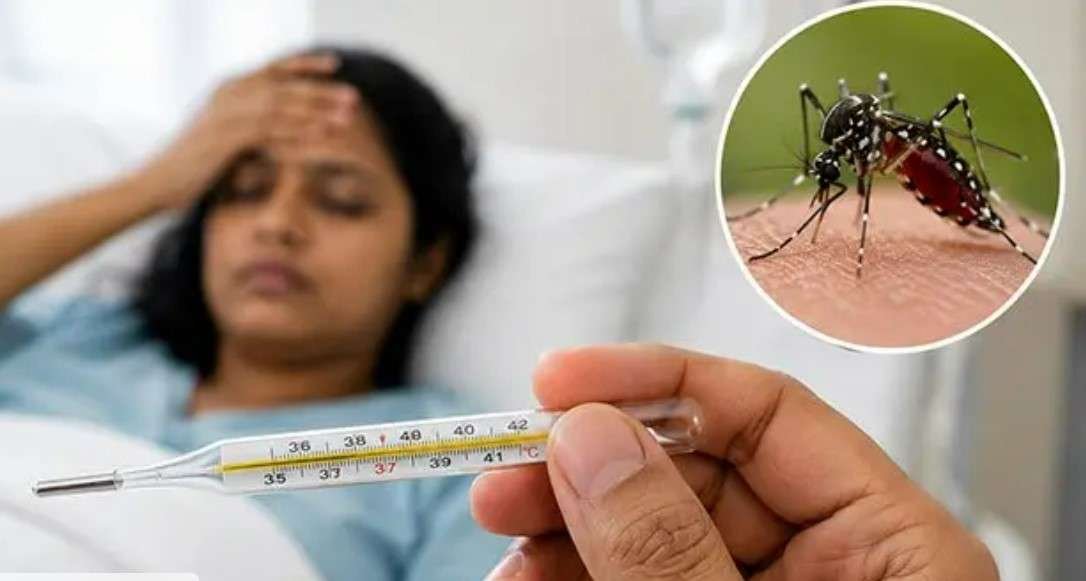
Majority of dengue deaths reported in Sri Lanka are women; health officials urge early medical treatment
The National Dengue Control Unit (NDCU) has urged women to seek immediate medical advice and treatment as soon as dengue symptoms appear, noting that the majority of dengue-related deaths reported across the country have been among women.
Acting Director of the NDCU, Dr. Kapila Kannangara, said that of the 53 dengue-related deaths reported so far this year, 37 were women.
According to Dr. Kannangara, one of the main reasons for the higher number of female fatalities is that many women continue with household responsibilities without taking adequate rest after falling ill.
He explained that although women diagnosed with dengue should remain completely at rest, many tend to ignore their condition due to domestic commitments.
As a result, seeking medical treatment is often delayed, leading to late hospital admissions that could ultimately prove fatal, he warned.
Dr. Kannangara also cautioned against relying on traditional remedies or home treatments for dengue, stressing that such practices could be extremely dangerous.
While acknowledging that traditional medicine may be beneficial for certain common illnesses, he emphasized that individuals suspected of having dengue should avoid experimenting with such remedies and instead seek prompt medical attention.
He noted that patients who attempt home remedies and seek hospital care only after their condition has deteriorated are far more difficult to treat.
Dr. Kannangara further warned that delays in treatment could lead to severe complications, including liver and kidney failure, and in some cases, patients may reach a stage where medical treatment is no longer effective.
According to the latest data, a total of 74,478 dengue cases have been reported across the country so far this year, with 19,100 cases recorded in July alone.
A further 843 dengue cases were reported within the past 24 hours.
Although there has been a slight decline in dengue transmission in recent weeks, Dr. Kannangara said the situation remains at a high-risk level, adding that special dengue control programmes are continuing across the country.
He urged anyone experiencing symptoms to consult a qualified medical practitioner within two days of the onset of illness.
The National Dengue Control Unit also reminded the public that maintaining clean surroundings and eliminating mosquito breeding sites remains a shared responsibility in preventing the spread of dengue.
Speaking further, Dr. Kannangara appealed to women to seek medical care from the very first day symptoms appear instead of delaying treatment.
He also warned against consuming unproven remedies such as papaya leaf juice, boiled jackfruit-based herbal preparations, or herbal concoctions made from plants such as ‘Monarakudumbiya’, saying that although such remedies may be believed to have benefits in certain situations, they are not appropriate for treating dengue.
Dr. Kannangara further advised that people with fever should avoid self-medicating with anything other than paracetamol to reduce the fever and seek professional medical advice promptly, noting that fever is a common symptom of dengue.
He added that medical specialists have observed a growing number of patients arriving at hospitals only after relying on home remedies for several days, by which time serious complications affecting the liver and kidneys may already have developed, making recovery significantly more difficult.
Local News
Unidentified woman’s body found on Kirinda Beach
27 October 2026
Lanka IOC increases Petrol 95 price
26 October 2026
Trending News
SIMs to be deactivated on unregistered new mobile devices from tomorrow
30 September 2020
CSE ASPI touch all-time high of 10,037.61
27 October 2021
Popular actress Sureni Senarath passes away
26 May 2021