
US to blockade Strait of Hormuz after Iran refuses nuclear demands
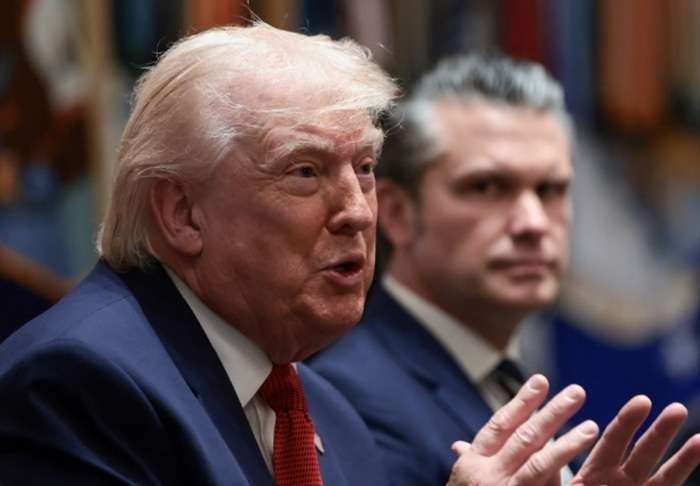
US President Donald Trump announced that the United States will begin a naval blockade of the Strait of Hormuz after Iran refused to abandon its nuclear ambitions following lengthy negotiations.
In a statement, President Trump said talks between US and Iranian representatives in Islamabad lasted nearly 20 hours and resulted in agreement on several issues, but failed on what he described as the most critical matter — Iran’s nuclear programme.
“Iran is unwilling to give up its nuclear ambitions,” President Trump said, adding that the issue outweighed all other points agreed during negotiations.
Trump also accused Iran of failing to reopen the Strait of Hormuz after previously promising to do so, claiming Tehran had created uncertainty by suggesting mines may have been placed in the waterway.
“They promised to open the Strait of Hormuz, and they knowingly failed to do so,” he said, noting that the situation had caused anxiety and disruption to countries worldwide.
President Trump further announced that the United States Navy would begin blocking ships attempting to enter or leave the strategic waterway.
“Effective immediately, the United States Navy will begin the process of blockading any and all ships trying to enter, or leave, the Strait of Hormuz,” Trump said.
He also warned that US forces would intercept vessels that paid tolls to Iran and would begin clearing mines allegedly placed in the Strait.
Trump added that any Iranian forces firing at US or commercial vessels would face military retaliation, saying US forces were “locked and loaded.”
The Strait of Hormuz is one of the world’s most critical oil transit routes, with a significant portion of global energy supplies passing through the narrow waterway connecting the Persian Gulf to international markets.
Local News
New licence regulations for music at events gazetted
21 September 2026
Severe flood warning issued for Mahaweli River in Pasbage Korale
20 September 2026
Norwood probe uncovers Sri Lanka’s largest Aswesuma fraud yet
20 September 2026
Dollar rate today: US Dollar selling rate falls to Rs. 334–336
18 September 2026
Trending News
SIMs to be deactivated on unregistered new mobile devices from tomorrow
30 September 2020
CSE ASPI touch all-time high of 10,037.61
27 October 2021
Popular actress Sureni Senarath passes away
26 May 2021